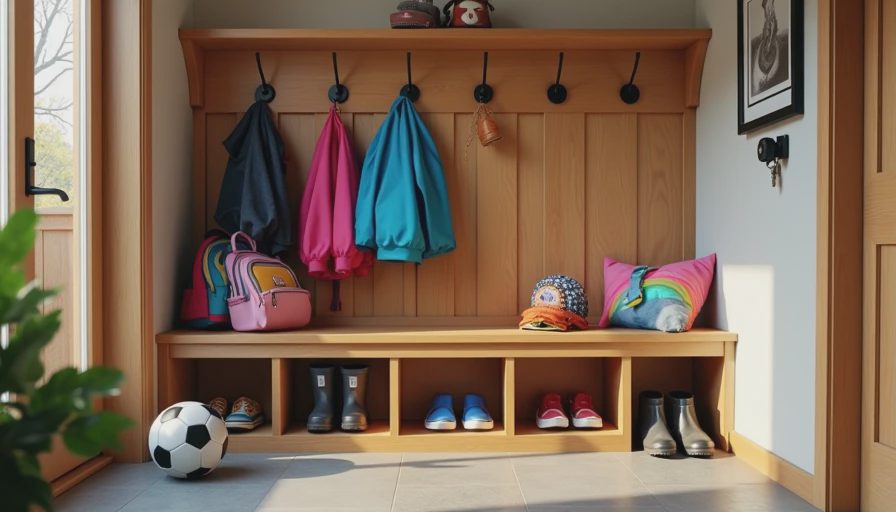
The Entryway That Looked Fine… Until We Actually Lived There
Hey, it’s Jack Whittaker back from suburban Indianapolis. If you’ve been following this launch series, you know I’ve been laying out all the lessons from our family remodel — the budget hits, contractor traps, flooring fails, cabinet upgrades, countertop lessons, change order chaos, and kid-proof realities that actually work. Today in Family-Tested Home we’re zeroing in on something that sounds minor but causes massive daily friction: the entryway.
I used to think the entryway was just a spot to drop keys and shoes. Boy, was I wrong. In a house with two young kids, soccer practice, rainy days, school backpacks, and normal life, a poorly planned entryway turns into a daily disaster zone that makes the whole house feel chaotic. We felt it immediately after moving back in, and fixing it became one of the smartest (and most used) changes we made.
The Most Common Entryway Problems in Family Homes
Shoe Avalanche
Shoes everywhere. Muddy boots kicked off just inside the door, sneakers piled up blocking the path. Our original setup had a tiny closet that filled up instantly. Guests couldn’t even find a place to stand.
Backpack and Jacket Explosion
Kids come home and immediately drop everything. Backpacks on the floor, jackets on chairs, lunch boxes on the counter. Within ten minutes the entryway looked like a yard sale.
Traffic Jam Central
Narrow pathways meant everyone was bumping into each other during morning rushes. Trying to get shoes on while holding a coffee and herding kids out the door created constant stress.
Dirt and Moisture Migration
Wet shoes and snowy boots tracked mess straight into the living areas. No containment meant constant cleaning and ruined floors further in.
No Place to Reset
No bench to sit and put on shoes, no hooks at kid height, no drop zone for keys and mail. Everything piled up and created visual and mental clutter.
These issues might seem small individually, but together they set a chaotic tone for the entire day.
What We Changed (And What Finally Worked)
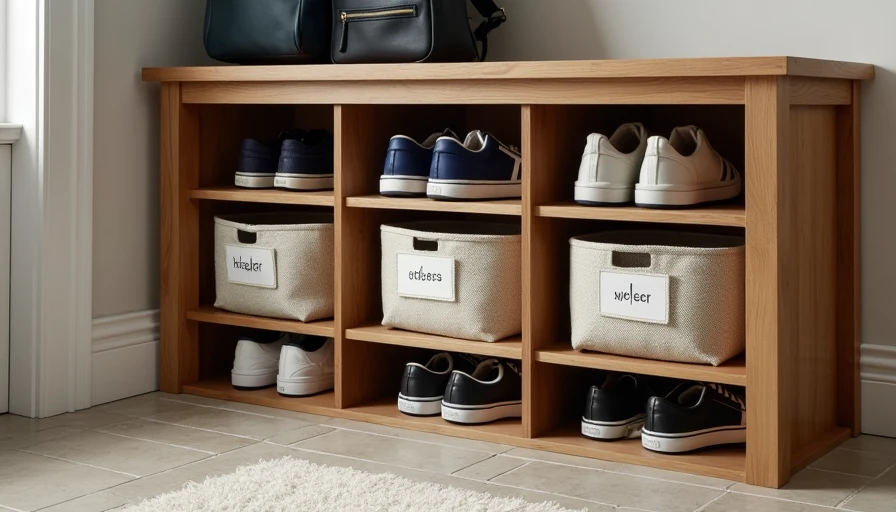
We tackled this in phases, focusing on practical, durable solutions rather than fancy built-ins.
Dedicated Drop Zone Storage
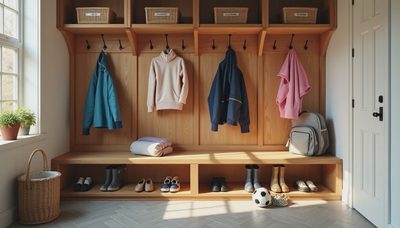
We installed a simple but sturdy bench with cubbies underneath. Hooks at two heights — adult and kid — on the wall. Labeled baskets for each family member. This alone cut the backpack avalanche by about 80%. The bench gives kids (and tired parents) a place to sit while dealing with shoes.
Durable, Easy-Clean Flooring
We put textured porcelain tile right inside the door with a subtle pattern that hides dirt. A low-profile boot tray that actually contains water and mud. This keeps mess from spreading and cleans up in seconds.
Smart Organization Systems
A shallow wall-mounted shelf for keys, mail, and sunglasses (out of kid reach but easy for adults).
A small charging station drawer in the bench for devices.
Clear “launch pad” baskets for next-day items like school bags and sports gear.
Better Flow and Safety
We widened the path slightly and added a mirror to make the space feel bigger and help with last-minute checks before leaving. Rounded edges on the bench to prevent bumps.
None of this was ultra-expensive custom millwork. It was thoughtful, off-the-shelf pieces plus some basic carpentry that paid off immediately.
Lessons Learned About Family Entryways
Function Beats Pretty Every Time
Our first attempt looked neat in photos but failed the real-life test within days. Durable materials and smart placement matter more than matching the Pinterest aesthetic perfectly.
Kid Height Is Non-Negotiable
If kids can’t reach the hooks or cubbies, they won’t use them. We learned this quickly and adjusted.
Containment Is Everything
Give mess a place to go. A good entryway doesn’t eliminate clutter — it contains it so the rest of the house stays calmer.
Think About Seasons and Routines
Winter boots need different storage than summer sandals. Morning rush versus afternoon drop-off require different solutions. Plan for both.
What I’d Do Differently If Starting Over
Build the entryway storage plan before any other decisions. It affects traffic flow for the whole house.
Budget more for proper flooring and containment upfront rather than fixing later.
Test the layout with actual family movement simulations (shoes on, backpacks, coats).
Include a small waste basket and hand sanitizer station — little things that prevent bigger messes.
Why Entryways Matter More Than People Think
A well-functioning entryway sets the tone for coming home and leaving the house. When it works, mornings are smoother, afternoons less stressful, and the whole home feels more organized. When it doesn’t, it creates constant low-level frustration that spills into the rest of family life.
This is exactly what Family-Tested Home is about — the practical details that make renovated houses actually livable instead of just look good.
Action Step for Your Home
Walk into your entryway right now and observe for five minutes. Where does stuff pile up? Where do people bump? What causes the most frustration during rushes? Take notes and start with one small fix — maybe just adding hooks at kid height or a boot tray. Small changes here deliver big daily wins.
What’s your biggest entryway headache (or best solution)? Share in the comments. We’re all trying to make family life smoother.
Thanks for sticking with the series. We’re building a solid foundation with these launch posts. Next we’ll head back to Budget Bruises to talk about cheap materials that end up costing more.
Remember the core truth: You don’t need the fanciest house. You need fewer dumb mistakes — and an entryway that doesn’t start your day in chaos.
No letters yet — be the first to write.