The Daily Drop Zone Disaster
Hey, it’s Jack Whittaker from suburban Indianapolis. If you’ve been following this launch series, you know I’ve been honest about the budget hits, contractor red flags, materials that failed, entryway chaos, and choices that aged fast. Today in Family-Tested Home we’re talking about something that impacts every single day: storage for school bags, shoes, and all the daily mess that comes with kids.
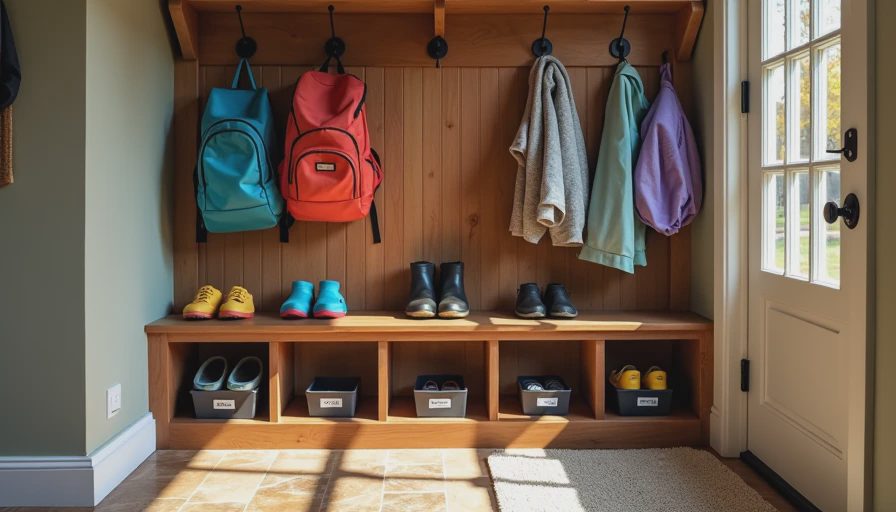
Before the remodel, our entryway and mudroom area was a constant war zone. Backpacks thrown on the floor, shoes kicked everywhere, jackets piling up, and random items migrating into the living room. It made coming home stressful instead of welcoming. After some targeted upgrades, that chaos dropped dramatically. These aren’t expensive custom built-ins — they’re smart, practical solutions that actually get used by the whole family.
Why Standard Storage Usually Fails Families
Most homes have tiny closets or basic coat racks that don’t account for real life. Kids can’t reach high hooks. Bags are heavy and awkward. Shoes come in wet or muddy. Without systems designed for daily flow, everything ends up on the floor or stuffed in overflowing closets.
We focused on three zones: entry drop-off, daily launch pad, and overflow storage. The results have been game-changing.
The Upgrades That Delivered the Biggest Wins
1. Kid-Accessible Bench + Cubbies
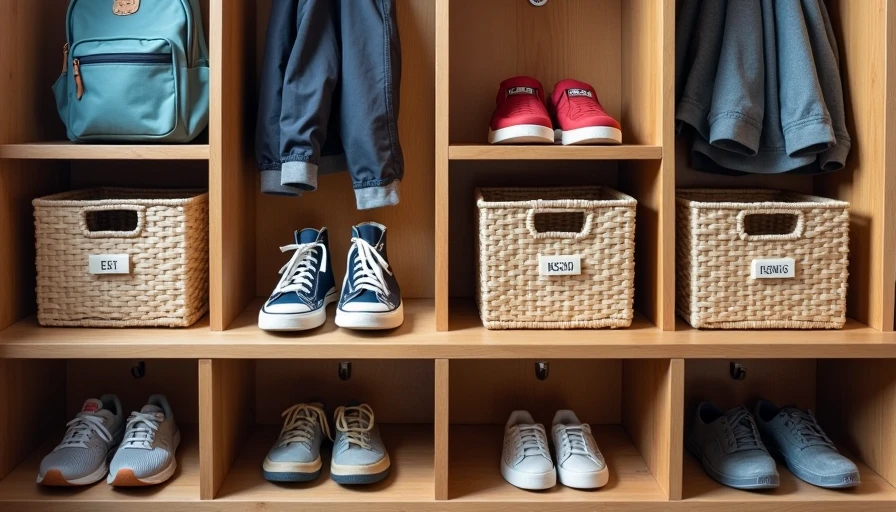
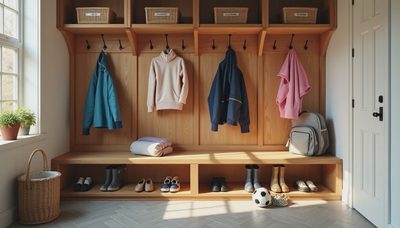
We built (well, had built) a simple bench with open cubbies underneath. Each kid has their own labeled spot for shoes and a hook above for backpacks. The bench provides a place to sit and put shoes on without hopping around. This one change cut the shoe avalanche by about 90%.
2. Multi-Level Hooks and Shelving
Two rows of sturdy hooks: lower for kids’ jackets and bags, higher for adults. A shallow shelf above for hats, gloves, and seasonal items. We used heavy-duty hardware so it doesn’t pull out when kids yank on it.
3. Boot Tray + Durable Flooring Combo
A wide, low-profile boot tray that contains wet and muddy shoes. Paired with textured porcelain tile in the entry zone, it keeps mess from spreading and cleans up fast.
4. Launch Pad Drawer System
In the kitchen/near entry we added a dedicated drawer for next-day items: school notes, water bottles, sports gear checklists. It prevents last-minute morning panic.
5. Hidden Overflow Storage
Deep pull-out drawers in the mudroom area for off-season gear and overflow. Not everything needs to be visible — closed storage keeps the space looking calmer.
All of these used standard materials and semi-custom cabinetry. Nothing ultra-luxury, but chosen for durability and real family use.
How These Upgrades Changed Daily Life
Mornings are smoother. Kids know exactly where to put their stuff when they come home. We can reset the entryway in under five minutes before guests arrive. The house feels less cluttered and more peaceful even on busy weekdays.
The best part? The systems encourage good habits. When everything has a logical home at kid height, they actually use it most of the time.
What I’d Do Differently Next Time
Plan storage before finalizing layouts — it affects traffic flow.
Overbuild slightly for growth. Kids get bigger and have more stuff.
Test with real items. We brought home sample backpacks and shoes during planning.
Mix open and closed storage thoughtfully. Too much open creates visual chaos.
Practical Tips for Your Home
Measure your family’s actual items (biggest backpack, tallest boots, etc.).
Prioritize accessibility over aesthetics in high-use zones.
Choose materials that wipe clean and handle moisture.
Label everything at first — it helps everyone build habits.
Start small if budget is tight: even adding a few hooks and a boot tray makes a difference.
Tying It to the Bigger Picture
Storage isn’t sexy, but great storage quietly makes family life better. It reduces arguments, cuts cleaning time, and makes coming home feel good instead of stressful. That’s the heart of Family-Tested Home — solutions that serve real daily life, not just look good in photos.
Action Step for You
Walk through your entry/mudroom area tonight. Note where stuff piles up and what causes the most frustration. Pick one upgrade from this list and implement it this weekend. You’ll feel the difference immediately.
What storage solution has worked best in your house (or what drives you crazy)? Drop it in the comments. We’re all figuring out this family life thing together.
Thanks for reading. We’re powering toward the end of the initial roadmap. Next we’ll head back to Budget Bruises with where to spend more in a kitchen — and where I wouldn’t again.
Remember: You don’t need the fanciest house. You need fewer dumb mistakes — and storage systems that actually handle the beautiful mess of family life.
No letters yet — be the first to write.