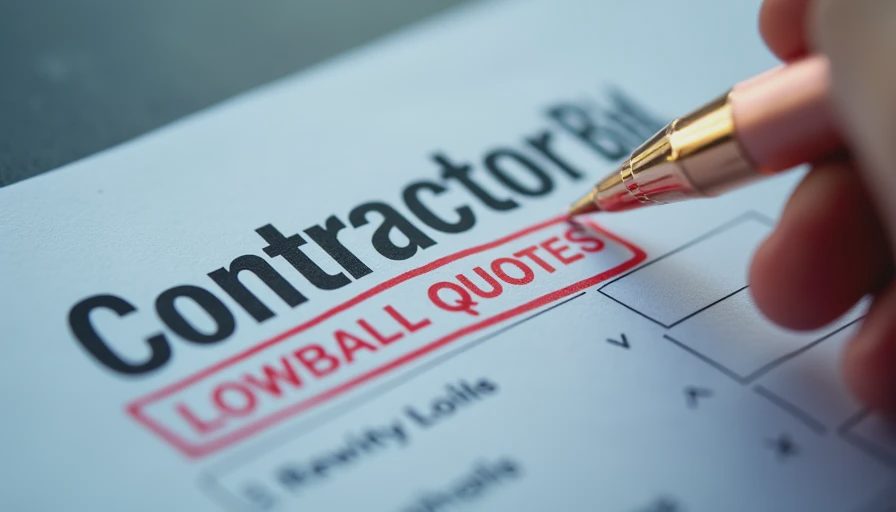
I’ve been there: three bids on my kitchen remodel, one nearly half the price of the others. My first instinct was to jump on the lowball quote and save thousands. But after a few painful lessons, I learned that the cheapest bid often costs the most in the long run. Let me walk you through **how to compare multiple contractor bids without getting confused by lowball quotes** — so you can spot the traps before you sign.
Why Lowball Quotes Are So Tempting (and Dangerous)
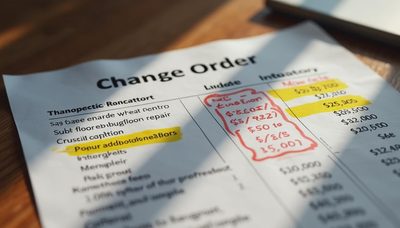
A lowball quote grabs your attention because it promises savings. But in construction, price usually reflects scope. A contractor who bids $18,000 for a job others quote at $28,000 is either cutting corners, missing line items, or planning to hit you with change orders. I once accepted a low bid on a bathroom reno, and by the end, extras pushed it past the highest original quote. The contractor had left out tile labor and waterproofing in the base number. Learn from my mistake: **how to compare multiple contractor bids without getting confused by lowball quotes** starts with understanding that low rarely means better.
The First Step: Make Sure Your Scope of Work Is Identical
Before you compare numbers, make sure you’re comparing apples to apples. Write a detailed scope of work — down to faucet brands, flooring material, paint sheen, and disposal of debris. Give that same scope to every contractor. If one bid says “demo and haul” and another says “demo, haul, and dump fees,” you’re not comparing the same job. I recommend creating a checklist of every task and ask each bidder to confirm they’ve included it. This step alone will help you see which lowball quotes are skipping critical steps. When you learn **how to compare multiple contractor bids without getting confused by lowball quotes**, a standardized scope is your anchor.
What to Look For Beyond the Bottom Line
Don’t just stare at the total price. Look at the line-item details. A reputable contractor will break down materials, labor, permits, and profit. A lowball quote often lumps everything into one vague number. Also check payment schedules — a big upfront deposit is a red flag. Insurance and licensing should be verified before you even consider the price. And ask yourself: Does this contractor communicate clearly? Did they show up on time for the estimate? Those intangibles matter as much as the dollar figure. Part of **how to compare multiple contractor bids without getting confused by lowball quotes** is trusting your gut when a bid feels too slick or too evasive.
How to Spot Hidden Costs in a Lowball Bid
Lowball quotes often hide costs in two places: allowances and exclusions. An allowance that says “countertops up to $500” might leave you paying thousands more when you pick a real material. Exclusions are even sneakier — the bid says “electrical rough-in,” but doesn’t include the panel upgrade or final trim-out. Always ask for a list of every exclusion. I keep a template for this: I ask each contractor, “What is NOT included in this price?” The answers will reveal which lowball quotes are incomplete. Mastering **how to compare multiple contractor bids without getting confused by lowball quotes** means knowing where the gaps are.

A Simple Comparison Table (in Prose)
Let’s compare three bids for a hypothetical 100-square-foot master bath gut remodel:
- **Bid A ($15,000):** Lowball. Only includes basic fixtures, no waterproofing, no tile labor, and a 50% deposit. No lien waiver mentioned.
- **Bid B ($22,000):** Mid-level. Full scope, includes a moisture barrier, mid-range tile allowance, and a 20% deposit with progress payments. Licensed and insured.
- **Bid C ($28,000):** Premium. Same scope as B but with premium material allowance, a project manager, and a two-year warranty.
Bid A looks great until you realize the missing items will cost $8,000+ in change orders. Bid B is the sweet spot for most families. This real-world example shows why learning **how to compare multiple contractor bids without getting confused by lowball quotes** pays off.
When to Walk Away from a Quote That Seems Too Good
If a quote is 30% or more below the others, walk away. Even if the contractor seems nice or promises a quick timeline. Low prices can mean unlicensed work, no permits, or subpar materials that will fail in a few years. A friend of mine took a low bid on a deck rebuild; six months later the wood warped and the rails wobbled. The contractor disappeared. Now he’s paying twice to redo it. That’s not a cheap mistake — that’s a repeat mistake. Remember: **how to compare multiple contractor bids without getting confused by lowball quotes** often means the high road is actually the safest.
Final Thoughts
Comparing bids isn’t about finding the lowest number. It’s about finding the best value. Use a checklist, verify scope, watch for exclusions, and never ignore your gut. You don’t need the fanciest house — you need fewer dumb mistakes. If you keep these tips in mind, you’ll navigate the bid process with confidence and avoid the regret that comes from a too-good-to-be-true quote.

No letters yet — be the first to write.